
DG Emission Monitoring
Measure NOx, SO2, CO, particulate matter, hydrocarbons, arsenic and benzene from your diesel generator's exhaust stack using CPCB-approved methods, so your consent to operate stays valid at every renewal.
What is DG emission monitoring?
DG emission monitoring is stack emission testing performed on a diesel generator's exhaust, measuring the pollutants it releases and checking them against CPCB permissible limits. Most commercial diesel generator sets above 125 kVA fall under CPCB emission regulation, and pollution control boards expect current stack emission data before renewing a consent to operate. A DG set that hasn't been tested recently, or that quietly drifts out of tune, is one of the most common reasons a facility fails a PCB inspection.
Equinox Labs collects emission samples directly from the DG exhaust stack and analyses them using CPCB-approved stack monitoring methods at NABL-accredited (ISO/IEC 17025) laboratories, trusted by 95,000+ clients nationwide. Reports come with pollutant readings, compliance remarks and improvement recommendations, ready for audit. It's one part of our broader environmental testing services, often paired with noise & light testing for the same DG installation.
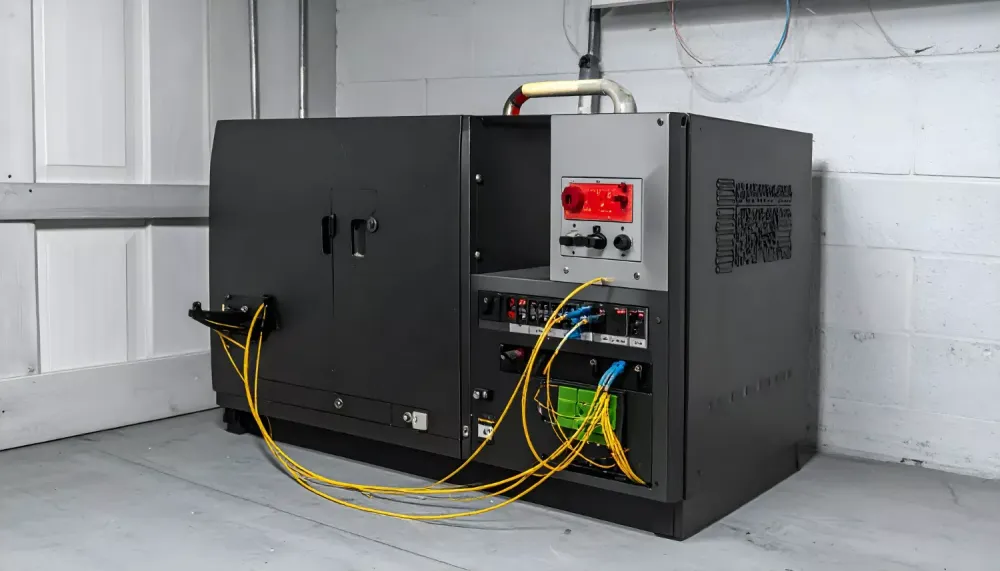
What DG emissions actually do to health and environment
The pollutant panel we test for isn't arbitrary. Each one carries a specific, documented risk.
- Nitrogen Oxides (NOx). Linked to respiratory illnesses and airway irritation with prolonged exposure.
- Carbon Monoxide (CO). Disrupts oxygen delivery in the bloodstream, causing headaches, fatigue and worse at high concentrations.
- Fine Particulate Matter (PM2.5/PM10). Penetrates deep into the lungs, causing cardiopulmonary damage over time.
- Hydrocarbons & Benzene. Unburnt hydrocarbons and benzene exposure carry an elevated cancer risk.
- Excess CO2. Adds directly to a facility's carbon footprint and undermines ESG/climate reporting.
- Arsenic. A trace toxic pollutant screened for in stack emissions, cumulative exposure risk over time.
DG Stack Emission Testing Services
On-site stack sampling and emission testing support, with results documented for environmental assessment.
Stack Exhaust Sampling
Emission samples collected directly from the DG set's exhaust stack under normal operating load.
NOx, SO2 & CO Analysis
Core combustion gases quantified against CPCB emission thresholds for diesel generator sets.
Particulate & Hydrocarbon Testing
PM2.5/PM10 and unburnt hydrocarbon measurement to flag incomplete combustion issues.
Compliance Reporting & Recommendations
Structured reports with pollutant readings, compliance remarks and corrective guidance.
End-to-End Equipment & Field Support
We supply all CPCB-approved monitoring instruments and field engineers, no equipment sourcing on your end.
ESG & CSR Reporting Support
Emission data formatted to feed directly into your annual ESG and CSR sustainability reporting.
Pollutants we measure
The stack emission parameter set CPCB expects for DG sets above 125 kVA.
Gaseous Emissions
Particulate & Trace
Built for anyone running backup power
From factories to hospitals and uptime-critical facilities.
Facilities Operating DG Sets Above 125 kVA
The threshold at which CPCB stack emission regulation typically applies.
Manufacturing & Industrial Units
Recurring stack testing to maintain pollution control board consent to operate.
Commercial Buildings & Malls
Backup power installations that need annual emission documentation for audits.
Data Centres & IT Parks
Uptime-critical backup generators needing consistent emission compliance records.
Hospitals & Healthcare Facilities
Critical backup power where emission compliance ties directly into facility accreditation.
Real Estate & Residential Complexes
DG backup for housing societies and commercial complexes, documented for occupancy compliance.
The 4 mandatory tests every DG set needs
Emission testing is one part of a bigger compliance picture: the full checklist pollution norms expect from a commercial diesel generator.
- 01 Fuel Quality Test. Confirms diesel meets specification before it ever reaches the exhaust stack.
- 02 Emission Check. The stack test we perform, covering NOx, SO2, CO, PM and hydrocarbons against CPCB limits.
- 03 Load Test. Verifies the DG set actually delivers its rated capacity under real load.
- 04 Noise Level Assessment. Ambient noise against CPCB day/night limits, via our noise & light testing.
How to Detect an Air Quality Crisis Before Complaints Start
Waiting for health complaints means you've already missed the early signs. This guide covers how to spot 'crisis' contaminants and use professional air sampling to catch problems before they escalate, using the same methodology behind CPCB-approved stack monitoring.
- Proactive Detection: why proactive detection demands extra vigilance from facility teams
- Crisis Contaminants: what the 'crisis' contaminants are and why they matter most
- Early Warning Signs: the real early warning signs that precede a full-blown crisis
- Professional Sampling Methods: what professional air sampling involves and when to use it
 Free Guide
How to Detect an Air Quality Crisis Before Complaints Start
Learn to spot 'crisis' contaminants and use professional air sampling to catch problems before they escalate. Download the free guide.
Download Your Free GuideWhat your emissions do to the air around you
 Video
Your Office AQI is 310 (But Nobody's Telling You)
- How diesel generator exhaust pushes local air quality into unhealthy territory
- Why stack and ambient monitoring is a statutory as well as a health issue
- The pollutants a compliant DG emission report has to cover
Sample to certified report, in four steps
The same process across every DG emission monitoring engagement.
Inquire
Tell us your DG set's capacity and how many units need testing.
Stack Sampling
Our field engineers collect emission samples from the exhaust stack under normal load.
Lab Analysis
Samples are analysed at our NABL-accredited labs using CPCB-approved methods.
Results & Support
We email your certified report and advise on any corrective action needed.
Access the Equinox PortalWhy Choose Equinox Labs for DG Emission Monitoring?
Get support with on-site stack sampling, emission testing and documented results for your facility's environmental monitoring needs.
NABL Accredited
ISO/IEC 17025 accredited testing means your reports are defensible with any PCB inspector.
CPCB-Approved Methodology
Stack sampling and analysis follow CPCB-prescribed methods end to end.
Pan-India Field Teams
Calibrated stack monitoring equipment deployed across 500+ cities, trusted by 95,000+ clients.
A Dedicated Account Manager
One point of contact who tracks renewal dates across every DG set you run.
DG Emission Monitoring FAQs
DG emission monitoring, also called diesel generator stack emission testing, involves measuring selected pollutants in a generator's exhaust. The testing scope may include parameters such as NOx, SO₂, CO, particulate matter and hydrocarbons, depending on the applicable requirements and agreed testing scope.
Applicability depends on the DG set's configuration, capacity, relevant emission requirements and the conditions applicable to the facility. Share your generator details and location with our team to help identify the appropriate testing scope.
Requirements vary according to the applicable regulations and site-specific conditions. Check the relevant consent conditions and requirements of the applicable Pollution Control Board to establish whether testing is required for your DG set.
The monitoring frequency depends on the applicable regulatory requirements, consent conditions and site-specific monitoring plan. Confirm the required frequency for your installation before scheduling a test.
Depending on the agreed scope, DG stack emission testing may include parameters such as nitrogen oxides (NOx), sulphur dioxide (SO₂), carbon monoxide (CO), particulate matter and hydrocarbons. Confirm the available parameters and required test panel with our team before booking.
Our team can coordinate the required monitoring equipment and on-site sampling arrangements for the agreed testing scope. Confirm the arrangements when scheduling your service.
A test report may support environmental documentation and a consent-to-operate application or renewal where relevant. Acceptance depends on the applicable requirements, the report's scope and methods, and the decision of the relevant authority. Confirm any specific submission requirements with the applicable Pollution Control Board.
Reports are typically delivered within 3–5 working days. Confirm the timeline for your testing scope, including when the turnaround period begins and whether additional monitoring time is required.
The price depends on factors such as the DG set's capacity and configuration, the number of units, required parameters, site location and testing scope. Contact Equinox Labs with these details to request a quotation.
Get your DG Emission Monitoring enquiry answered
Tell us a little about your requirement and our team will get back to you within one working day.
- Response within one working day
- PAN-India service network
- Dedicated account manager
Thanks, we've got your enquiry
Our team will reach out within one working day to discuss your requirement.