
Compressed Air Testing
Compressed air quality testing for particles, oil content, moisture and microbiological contamination in product-contact air systems. Testing can be selected according to applicable ISO 8573-1 purity requirements and your process needs.
What is compressed air testing?
Compressed air testing measures particle count, oil content, water/dew point and microbiological contamination against ISO 8573-1 purity classes. Compressed air looks invisible, but in food packaging lines, pharmaceutical filling rooms and electronics assembly, it comes into direct contact with the product. Oil carryover from compressors, moisture that supports microbial growth, and particulate contamination can all end up inside a "sealed" product without anyone noticing, until a customer complaint or an audit finding traces it back.
Equinox Labs tests compressed air quality against ISO 8573-1, covering particle count, oil content, water/dew point and microbiological contamination, trusted by 95,000+ clients across industries. Our engineers sample directly from your point-of-use air lines, so results reflect what actually reaches your product, not just what leaves the compressor. It's often tested alongside our broader environmental testing services.
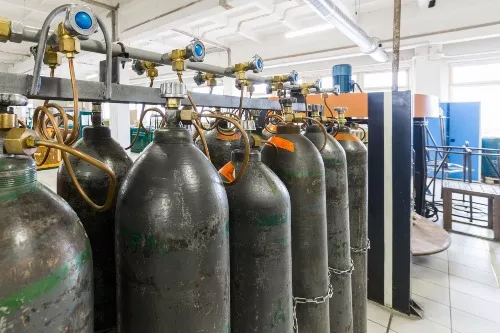
Where compressed air contamination comes from
Three sources account for almost every failed sample.
- Ambient Air Intake. Dust, mould spores and hydrocarbons entering the system through intake vents.
- Compressor Lubricants. Residual oil from the compressor or associated systems leaking into compressed air.
- Internal Pipework. Corrosion, scale or microbial buildup inside pipes compromising air purity.
What clean compressed air actually protects
Four reasons this shows up on every quality team's checklist.
- Air Purity In Production. Detects and eliminates traces of oil, water vapour, particles or microorganisms in air lines.
- ISO 8573 Compliance. Testing adheres to ISO 8573 guidelines so your systems stay audit-ready.
- Equipment Protection. Keeps air-driven tools and machinery running without contamination-related breakdowns.
- Product Quality. Prevents impurity-driven damage that compromises final product integrity and consistency.
Compressed air testing across every contamination class
Full ISO 8573-1 purity class assessment, wherever compressed air meets your product.
Particle Count
Solid particle contamination measured against ISO 8573-1 purity classes.
Oil Content
Residual oil aerosol and vapour testing to prevent product contamination.
Water Content / Dew Point
Moisture and pressure dew point testing to control corrosion and microbial risk.
Microbiological Testing
Viable microbial count for compressed air used in food, pharma and cleanroom applications.
Contamination Source Diagnosis
Pinpoints whether contamination originates from ambient intake, compressor oil carryover, or internal pipework.
Cleanroom & GMP-Grade Reporting
Structured, audit-ready reports formatted for food, pharma and electronics quality systems.
Parameters we test
Full ISO 8573-1 purity class panel, point-of-use.
Particulate
Oil & Moisture
Microbiological
Built for lines where air touches product
From food packaging to pharma filling rooms and precision assembly.
Food & Beverage Manufacturing
Compressed air used in bottle blowing, filling and packaging lines.
Pharmaceutical & Nutraceutical Plants
Cleanroom-grade compressed air for tablet coating, filling and inhaler applications.
Electronics & Precision Manufacturing
Contamination-sensitive assembly lines needing oil-free, particle-controlled air.
Cosmetics & Personal Care Manufacturers
Compressed air in filling and aerosol lines, alongside our cosmetic testing services.
Medical Device Manufacturers
Cleanroom air purity for device assembly, packaging and sterile-barrier processes.
Automotive & Industrial Assembly
Air-driven tooling and paint-line applications where contamination drives rework and defects.
Strategic Guide to Workplace Safety 2026
Employee wellness and brand reputation are tied to workplace environment quality, and that includes the air moving through your production and utility lines. This guide is a solution-driven roadmap for managing the invisible variables behind organizational resilience.
- Invisible Environmental Risks: why 2026 workplace safety is driven by invisible risks, not visible accidents
- Integrated Air, Water & Food Control: how integrated control shapes employee wellness and brand reputation
- Hidden Building Failures: from HVAC contamination to plumbing biofilms and vendor hygiene gaps
- Verify-Based Safety Model: why organisations must shift from trust-based to verify-based safety
 Free Guide
Strategic Guide to Workplace Safety 2026
A solution-driven roadmap for managing the invisible environmental variables behind organisational resilience. Download the free guide.
Download Your Free GuideWhat contaminated compressed air carries
 Video
Inhaling Particulate Matter Can Affect Human Health?
- How particulate matter enters compressed air lines and what it does to health
- Why food, pharma and packaging lines treat compressed air as a direct product contact point
- The oil, water and microbial checks that keep a compressed air system compliant
Sample to certified report, in four steps
The same process across every compressed air testing engagement.
Inquire
Tell us which air lines and purity class you need to verify.
On-Site Sampling
Our engineers sample directly from your point-of-use compressed air lines.
Testing
Samples are analysed against ISO 8573-1 purity classes at our accredited labs.
Results & Support
We email your certified report and advise on any corrective action needed.
Access the Equinox PortalAir quality data your quality team can act on
Testing within our NABL-accredited scope follows the applicable accredited methods and requirements. Reports provide documented results to support compressed air quality assessments.
NABL Accredited
ISO/IEC 17025 accredited testing means your reports are defensible in any audit.
Pan-India Field Teams
On-site sampling across 500+ cities, trusted by 95,000+ clients nationwide.
Cleanroom & GMP Experience
Familiar with the purity expectations of food, pharma and electronics manufacturing.
A Dedicated Account Manager
One point of contact for your recurring compressed air testing schedule.
Compressed air testing FAQs
Compressed air testing measures particle count, oil content, water/dew point and microbiological contamination in compressed air lines against ISO 8573-1 purity classes, sampled at the point of use where the air actually contacts your product.
ISO 8573-1 is the international standard that classifies compressed air quality by purity class, based on particle count, oil content and water content. Food, pharma and electronics manufacturers typically need to meet a specific class for their point-of-use air.
We sample at the point of use, the outlet closest to where the compressed air actually contacts your product, since air quality can change significantly between the compressor and the end of the line.
Most food and pharma facilities test compressed air quality annually, or more frequently if required by a specific customer or certification audit, and after any change to compressor or filtration equipment.
Common causes include worn compressor seals (oil carryover), inadequate drying (high dew point) or degraded filtration (particle and microbial contamination). Your report will flag exactly which parameter failed.
From three main sources: ambient air intake pulling in dust, mould spores or hydrocarbons; residual oil leaking from the compressor or associated systems; and corrosion, scale or microbial buildup inside internal pipework.
Food and beverage packaging, pharmaceutical manufacturing, cosmetics, medical devices and electronics assembly: anywhere compressed air comes into direct or indirect contact with the product, especially where microbial sampling is critical.
Get your Compressed Air Testing enquiry answered
Tell us a little about your requirement and our team will get back to you within one working day.
- Response within one working day
- PAN-India service network
- Dedicated account manager
Thanks, we've got your enquiry
Our team will reach out within one working day to discuss your requirement.