
Cosmetic Testing
Microbiological safety, heavy metals, preservative efficacy and stability testing for skincare, haircare, body care and makeup products, aligned with CDSCO and Cosmetics Rules 2020.
What is cosmetic testing?
Cosmetic testing verifies that skincare, haircare, body care and makeup products are microbiologically safe, free of harmful heavy metals, chemically stable and effective at what they claim to do. Products sold in India have to satisfy CDSCO under the Cosmetics Rules 2020, with manufacturing or import approval routed through the DCGI or the relevant State Licensing Authority (SLA). Skipping this step doesn't just risk a regulatory rejection. It risks a customer reaction on skin or hair that a shelf-stable, properly tested product would never have caused.
Equinox Labs tests cosmetic products at NABL-accredited (ISO/IEC 17025) laboratories. If you also need to validate label claims or check ingredient migration from packaging, see our product claim validation and migration testing services.
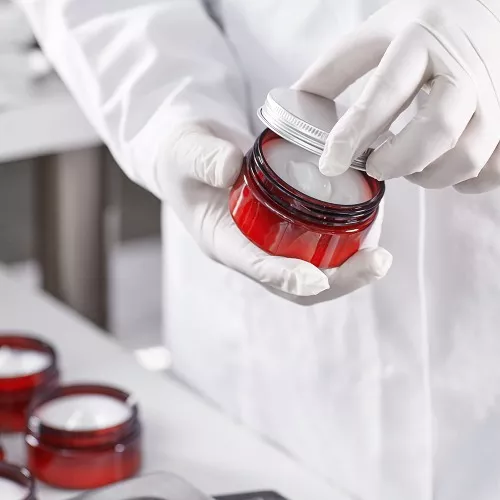
What happens when a cosmetic product goes untested?
Four consequences that reach customers and regulators alike.
- Skin and scalp reactions. Microbial contamination in an untested batch can trigger irritation or infection on repeated use.
- Heavy metal exposure. Trace lead, arsenic, mercury or cadmium from raw materials or pigments can build up with repeated use.
- Regulatory rejection. Products without CDSCO-aligned testing data can be held back at licensing or import stage.
- Product breakdown. Without stability testing, formulations can separate, discolour or lose potency before the labelled shelf life ends.
What does cosmetic testing cover?
Safety, purity, performance and stability, tested together.
Microbiological Safety
Screens for bacteria, yeast, mould and pathogens like Pseudomonas aeruginosa and Staph aureus.
Heavy Metals
Lead, arsenic, mercury and cadmium screening across raw materials and pigments.
Preservative Efficacy (Challenge Test)
Confirms your preservative system controls microbial growth across the full shelf life.
Physicochemical & Stability
pH, viscosity and formulation stability tracked across accelerated and real-time shelf life.
Efficacy Testing
Validates anti-aging, moisturizing and sun-protection claims with evidence-backed data.
Regulatory Compliance Reporting
Structured reports aligned to CDSCO and Cosmetics Rules 2020 documentation needs.
What parameters get tested in a cosmetic product?
Microbial, chemical and physical parameters across the full formulation.
Microbiological
Heavy Metals
Physicochemical
Cosmetic Products We Test
Testing across skin care, hair care, body care, makeup, men's grooming and baby care products.
Skin Care Products
Hair Care Products
Body Care & Hygiene
Makeup & Color Cosmetics
Men's Grooming
Kids & Baby Care
Who needs cosmetic testing?
From skincare brands to importers and contract manufacturers.
Skincare & Haircare Brands
Formulation safety and stability testing ahead of launch or reformulation.
Contract Manufacturers
Batch-level testing that keeps every private-label run within spec.
Importers & Distributors
CDSCO-aligned documentation to clear customs and licensing checks.
Body Care & Makeup Brands
Full-line testing across lotions, cleansers, and colour cosmetics.
Men's Grooming & Baby Care Brands
Category-specific safety thresholds for sensitive-use formulations.
R&D & Regulatory Affairs Teams
Evidence-backed data to support new claims before they go to market.
The Complete Guide to Cosmetic Testing
Cosmetic products go through a chain of safety, purity and performance checks before they're ready for market. This guide walks through what gets tested, why, and how it maps to CDSCO and Cosmetics Rules 2020 requirements.
- Safety assessments. The core safety checks every cosmetic product needs before launch.
- Microbial testing. How bacteria, yeast and mould screening protects consumer safety.
- Stability studies. Why accelerated and real-time stability testing predicts shelf life.
- Cosmetics Rules 2020. What CDSCO compliance actually requires from brands and importers.
 Free Guide
The Complete Guide to Cosmetic Testing
Everything brands and manufacturers need to know before taking a cosmetic product to market. Download the free guide.
Download Your Free GuideSample to certified report, in four steps
The same process across every product category.
Inquire
Tell us your product category and which regulatory or launch milestone you're testing for.
Sample Submission
Send product samples to our lab, or we arrange collection from your facility.
Testing
Samples are tested at our NABL-accredited labs across safety, purity and performance parameters.
Results & Support
We email your certified report and help interpret results against CDSCO requirements.
Access the Equinox PortalWhy choose Equinox Labs for cosmetic testing?
Accredited methodology and working fluency in CDSCO requirements.
NABL Accredited
ISO/IEC 17025 accredited testing that regulators and auditors accept without question.
CDSCO Fluency
Familiar with Cosmetics Rules 2020 documentation across DCGI and State Licensing Authorities.
Pan-India Reach
Sample logistics and testing coverage across 500+ cities.
A Dedicated Account Manager
One point of contact who tracks your testing calendar across product lines.
Cosmetic Testing FAQs
Cosmetic testing verifies that skincare, haircare, body care and makeup products are microbiologically safe, free of harmful heavy metals, chemically stable and effective at what they claim to do, before they reach a shelf or a regulator.
Yes. Cosmetics sold in India must comply with the Cosmetics Rules 2020 under CDSCO, and manufacturing or import typically requires approval through the DCGI or the relevant State Licensing Authority.
It screens for bacteria, yeast, mould and specified pathogens such as Pseudomonas aeruginosa and Staphylococcus aureus, confirming the product is safe for repeated skin or hair contact.
A challenge test confirms your preservative system can actually control microbial growth across the product's shelf life, not just at the point of manufacture. Without it, contamination can develop after the product is opened and used.
Lead, arsenic, mercury and cadmium are the primary heavy metals screened, since even trace contamination from raw materials or pigments can trigger regulatory rejection.
Efficacy testing validates specific product claims such as anti-aging, moisturizing or sun protection, giving you evidence-backed data to support labeling and marketing claims.
Skincare, haircare, body care, makeup, men's grooming and baby care products all require testing before market launch, whether manufactured domestically or imported.
Get your Cosmetic Testing enquiry answered
Tell us a little about your requirement and our team will get back to you within one working day.
- Response within one working day
- PAN-India service network
- Dedicated account manager
Thanks, we've got your enquiry
Our team will reach out within one working day to discuss your requirement.