
STP & ETP Testing
Verify treated sewage and industrial effluent against CPCB and state PCB discharge norms before it leaves your premises, covering BOD, COD, TSS, heavy metals and more.
What is STP and ETP testing?
A Sewage Treatment Plant (STP) processes domestic sewage and greywater, while an Effluent Treatment Plant (ETP) treats industrial process wastewater. Any facility that generates sewage or industrial effluent (residential societies, hotels, hospitality chains and factories alike) is required to treat it before discharge, and to prove the treated output meets pollution control board consent conditions. Untreated or under-treated discharge risks fines, a suspended consent to operate, and environmental damage that's far more expensive to fix than to test for.
Equinox Labs tests Sewage Treatment Plant (STP) and Effluent Treatment Plant (ETP) outlets against ISO, CPCB and MoEF guidelines, covering pH, BOD, COD, TSS, TDS, oil & grease and heavy metals, with custom effluent profiles for pharmaceutical, textile, food & beverage and manufacturing sectors. Testing is carried out at NABL-accredited (ISO/IEC 17025) laboratories, trusted by 95,000+ clients nationwide. It's one part of our broader environmental testing services.
What STP and ETP testing actually protects
Testing provides information about treated wastewater quality and helps organisations investigate whether their treatment processes are achieving the intended results.
- Environmental Protection: prevents untreated sewage from polluting soil and water ecosystems.
- Public Health Safety: reduces the risk of waterborne disease transmission from untreated discharge.
- Compliance Assurance: confirms treated sewage meets permissible discharge standards.
- Regulatory Compliance: supports adherence to municipal and environmental board regulations.
- Water Reuse Efficiency: confirmed-safe ETP water can be reused for gardening, flushing or cleaning.
- Legal & Financial Safety: prevents fines and enforcement action by keeping discharge within compliance standards.
- Groundwater Protection: stops contaminated effluent from seeping into and degrading groundwater sources.
- Workplace & Environmental Safety: protects staff and surrounding communities from effluent-related hazards.
What Does STP & ETP Testing Cover?
Standard discharge parameters, plus sector-specific effluent profiling.
STP Outlet Testing
pH, conductivity, chlorides, ammonical nitrogen and other sewage treatment plant parameters.
ETP Effluent & Heavy Metal Testing
BOD, COD, TSS, TDS, oil & grease and heavy metals like lead, arsenic and chromium.
Custom Effluent Profiling
Sector-specific parameter sets for pharmaceutical, textile, food & beverage and manufacturing effluent.
Consent-to-Operate Compliance Reporting
Reports formatted against CPCB, state PCB and MoEF discharge norms for audit submission.
Water Reuse Feasibility Testing
Confirms treated ETP water is genuinely safe to reuse for gardening, flushing or cleaning before you rely on it.
Groundwater & Public Health Safeguarding
Verifies treated discharge won't contaminate groundwater or carry waterborne disease risk downstream.
Which Parameters Are Tested in STP and ETP Water?
The full panel used for STP and ETP discharge compliance.
STP Parameters
ETP Parameters
Other
Who Needs STP and ETP Testing?
From residential societies to process manufacturing plants.
Residential Societies & Housing Complexes
Regular STP testing to confirm treated water is safe for reuse or discharge.
Hotels & Hospitality Chains
Consent-to-operate compliance testing for on-site sewage and effluent treatment setups.
Manufacturing & Process Industries
Custom ETP effluent profiling for pharmaceutical, textile and F&B production lines.
Commercial Office Complexes
On-site treatment plant compliance for large multi-tenant office developments.
Educational & Healthcare Campuses
Independent on-site STP testing for large campuses serving students, staff and patients.
Industrial Estates & SEZs
Multi-unit ETP compliance monitoring across shared or dedicated treatment infrastructure.
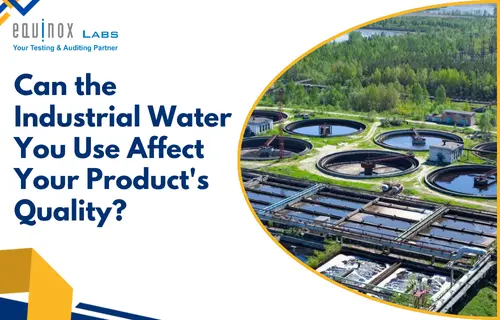
Industrial Water Testing for Product Quality & Compliance
Industrial water quality determines how efficiently your plant operates and how safely products are manufactured, on both the intake and discharge side. Learn how contamination affects equipment, consistency and compliance, and what accredited testing actually verifies.
- Process Disruption: how contaminated water disrupts processes and damages equipment
- Water Quality Standards: why standards protect consistency across industrial operations
- Key Risk Parameters: how key testing parameters indicate chemical or microbial risk
- Accredited Testing: why accredited labs ensure reliable, defensible compliance
 Free Guide
Industrial Water Testing for Product Quality & Compliance
Learn how contaminated water disrupts processes and damages equipment, and what accredited testing verifies. Download the free guide.
Download Your Free GuideWhere effluent testing meets ESG
 Video
Problems in the ESG Industries and Their Solutions
- How STP and ETP performance data feeds environmental compliance and ESG reporting
- The discharge parameters regulators and auditors look at
- Common treatment-plant problems and how monitoring catches them early
Sample to certified report, in four steps
The same process across every STP/ETP testing engagement.
Inquire
Tell us your plant type and which discharge parameters need testing.
Sample Collection
Our field engineers collect outlet samples from your STP or ETP on-site.
Lab Analysis
Samples are analysed at our NABL-accredited labs against CPCB and MoEF norms.
Results & Support
We email your certified report and advise on any corrective action needed.
Access the Equinox PortalDischarge data that stands up to a PCB inspection
Accredited methodology, sector-specific effluent expertise, and a team that reads the numbers with you.
NABL Accredited
ISO/IEC 17025 accredited testing means your reports are defensible with any PCB inspector.
CPCB & MoEF Fluency
Deep working knowledge of CPCB, state PCB and MoEF discharge norms.
Pan-India Field Teams
Sample collection and testing coverage across 500+ cities, trusted by 95,000+ clients.
A Dedicated Account Manager
One point of contact who tracks your testing calendar across every site.
STP/ETP Testing FAQs
STP and ETP testing is the laboratory analysis of treated wastewater to assess selected quality parameters. STP testing focuses on treated domestic sewage, while ETP testing focuses on industrial or process wastewater. Parameters and acceptance criteria depend on the treatment plant, discharge destination and applicable requirements.
Testing and monitoring obligations depend on the applicable regulatory requirements, Pollution Control Board directions and conditions specified in the facility's consent or authorisation. Facilities should review the requirements that apply to their treatment plant rather than assume that one testing schedule applies to every site.
STP testing assesses treated domestic sewage, while ETP testing assesses treated industrial or process wastewater. STP parameters may include pH, conductivity and other relevant characteristics. ETP testing may include BOD, COD, TSS, TDS, oil and grease, selected heavy metals and industry-specific parameters.
The required testing frequency depends on the applicable consent conditions, regulatory requirements, plant operations and monitoring plan. A three-to-six-month interval may be considered where appropriate, but the facility should follow the schedule and conditions applicable to its site.
The applicable testing criteria depend on the wastewater source, discharge destination, industry and relevant regulatory requirements. The testing scope should be confirmed against applicable CPCB or State Pollution Control Board requirements and the facility's consent conditions before sample submission.
Treated ETP water may be suitable for certain reuse applications if it meets the relevant quality criteria for the intended use. Requirements can differ for applications such as gardening, flushing, cleaning and industrial reuse. Confirm the applicable criteria before reusing treated wastewater.
Residential societies, hotels, commercial buildings, educational and healthcare campuses, manufacturing facilities and industrial estates may need STP or ETP testing when they operate wastewater treatment systems or have relevant monitoring obligations. The appropriate testing scope depends on the site and its requirements.
Our standard turnaround for STP and ETP testing is 3–5 working days. Actual timelines may depend on the selected parameters, sample collection arrangements and analytical requirements. Confirm the expected turnaround before scheduling testing.
The cost of STP and ETP testing depends on the number and type of parameters, wastewater characteristics, sample collection requirements, site location and testing scope. Contact Equinox Labs with your plant details and testing requirements to discuss the appropriate panel and obtain a quotation.
Get your STP/ETP Testing enquiry answered
Tell us a little about your requirement and our team will get back to you within one working day.
- Response within one working day
- PAN-India service network
- Dedicated account manager
Thanks, we've got your enquiry
Our team will reach out within one working day to discuss your requirement.